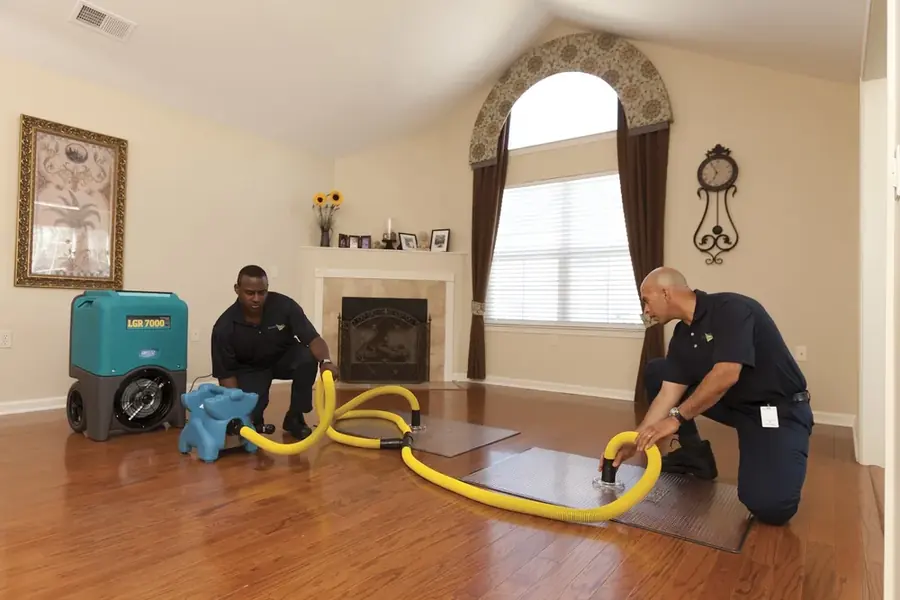
How the crew handles water extraction in Pasadena
Call and dispatch
A real person answers 24/7 and the nearest Pasadena crew rolls with pumps, air movers, and moisture meters.
On-site assessment
The crew traces the source and the full reach of the water, including what soaked into subfloor, plaster, and wall cavities.
Extract and dry
The extraction crew pulls the standing water, then runs air movers and dehumidifiers to the IICRC S500 standard, not just the surface.
Verify and document
The drying team logs moisture readings until the structure reads truly dry, then documents the loss for your insurance claim.
When water is standing in a Pasadena garage or spreading across a ground floor, the clock starts the moment it lands. The crew answers the phone live 24 hours a day and reaches most of Pasadena and the west San Gabriel Valley day or night with truck-mounted and portable pumps ready to run. Call (626) 314-6471 and the pump-out starts right away.
Emergency water extraction across Pasadena
Standing water never sits still. It wicks up drywall, soaks into subfloor and framing, and swells hardwood until it cups and lifts. Pull it in the first hours and you often save the baseboards, cabinets, and flooring that would otherwise be torn out.
Speed also beats the mold clock, since damp material can grow mold within 24 to 48 hours. SOS Restoration keeps crews staged across the valley, so a call from Pasadena, Arcadia, or Altadena gets the same fast pump-out, with truck-mounted units for a big loss and portable extractors for tight interior spaces and upper floors. For simple steps to stay safe while water is still rising, the Ready.gov flood safety guide lays them out plainly.
Where standing water hides in Pasadena homes
Water finds the low, hidden spots first. In homes around Arcadia, Temple City, Bungalow Heaven, and Washington Square crews most often pull it from:
- Attached and detached garages, where foothill runoff and water-heater failures pool
- Raised-foundation crawl spaces that trap water under the house
- Under hardwood and under tile set over a concrete slab
- Inside wall cavities and behind baseboards, out of sight
- Beneath kitchen and bath cabinets, where a slow supply leak collects
Older Craftsman and mid-century materials soak fast, so crews map moisture with meters and thermal imaging instead of guessing. A floor that looks dry on top can still hold enough water in the subfloor to cup the boards and feed mold a week later.
Not all water is the same
Part of a safe pump-out is reading the water. Clean Category 1 water from a supply line is different from grey Category 2 water off an appliance, and different again from Category 3 black water that came up through a drain. Each calls for its own protection, cleaning, and disposal rules, and the category can change the longer the water sits.
That reading also decides what crews save: hard surfaces usually clean and dry in place, while soaked carpet pad and drywall that sat in dirty water are safer to remove than to gamble on. When a backup is involved, the sewage and black water crew handles the extraction with the right gear and protection.
Drying, insurance, and getting started
Getting the water out is step one; drying the structure is step two, and the structural drying crew sees the dry-out through to a verified finish. If a storm or a hidden pipe put the water there, the flood damage cleanup and slab leak water damage crews handle the whole job. The EPA guide to mold explains why the first 24 to 48 hours matter. Sudden water damage is covered on most Pasadena homeowners policies, so in most cases you pay only your deductible, and crews document the loss for your claim. Call (626) 314-6471 any hour.
Standing water in your home right now? Call and a crew is on the way across Pasadena and the San Gabriel Valley to start pumping.
☎ Call (626) 314-6471Why fast extraction matters
Every hour water sits, it wicks deeper into subfloor, framing, and wall cavities, and the mold clock runs from 24 to 48 hours. Older Pasadena plaster and hardwood soak quickly, so the difference between a same-day pump-out and a next-day one is often the difference between drying a floor and replacing it.
Why Pasadena homeowners call us
Rapid local response
The response team answers 24/7, and the nearest crew heads out the moment you call, across Pasadena and the San Gabriel Valley.
IICRC S500 drying standard
Crews take daily moisture readings and dry to the IICRC S500 standard before the equipment comes out, not just the surface.
Claim-ready documentation
The loss is documented with photos and daily moisture readings, the paperwork an adjuster needs to move a claim.
Local water damage experts
From galvanized pipes to slab foundations and foothill runoff, the local pros know how water moves in Pasadena and the San Gabriel Valley.
From Old Pasadena across the west San Gabriel Valley
Pasadena water damage pros respond city-wide and across the west San Gabriel Valley, day or night.
Local crews cover all of Pasadena and the west San Gabriel Valley, day or night. Whoever answers the Pasadena line asks for the cross street and which level of the home is wet.
Coverage runs across Pasadena, Altadena, South Pasadena, San Marino, Arcadia, Sierra Madre, La Canada Flintridge, Monrovia, San Gabriel, Temple City, and Alhambra.
See every neighborhood and ZIP covered ›Related restoration services
Common questions, answered
How fast can you extract water in Pasadena?
The response team answers the phone live 24 hours a day and reaches most of Pasadena and the San Gabriel Valley day or night. The faster crews pump the water out, the less it soaks into your floors and framing. Call (626) 314-6471 and you will reach a real person.
What is the difference between clean, grey, and black water?
Clean Category 1 water comes from a supply line. Grey Category 2 water carries some contamination, often from an appliance. Black Category 3 water, like a drain backup or floodwater, is unsafe and calls for full protection and disposal of soaked porous material.
How soon does mold start after standing water?
Mold can begin within 24 to 48 hours on damp material. That is why crews pump out fast and move straight into drying, so a small loss does not turn into a mold problem inside your walls.
Do you pump out flooded garages and crawl spaces?
Yes. Garages and raised-foundation crawl spaces are two of the most common places crews pull water in Pasadena, since foothill runoff and hidden leaks collect there. Crews extract the water and dry the space so it does not keep the framing damp.
Will insurance cover water extraction?
Usually yes when the water damage is sudden and accidental, such as a burst pipe or a storm-driven event. Crews document the loss with photos and moisture readings so in most cases you pay only your deductible.
What happens to soaked carpet, drywall, and flooring?
Crews save what can be dried and cleaned and remove what cannot. Carpet pad and drywall that sat in dirty water usually come out, while hardwood can often be saved if crews reach it fast.
Do I need to leave during extraction?
Usually not for a contained job. If water is near the electrical panel or the space is otherwise unsafe, the crew may ask you to stay clear of that area while crews work, and the crew will tell you plainly what is safe.
Which neighborhoods and ZIPs do you serve?
Crews serve all of Pasadena and the west San Gabriel Valley, including Arcadia, Temple City, Altadena, San Marino, South Pasadena, Sierra Madre, and the 91101 through 91107 ZIP codes.
Pasadena's water damage crew is standing by
Water sitting means damage growing. Call SOS Restoration and a Pasadena crew heads out across the San Gabriel Valley, day or night.
(626) 314-6471One call brings a Pasadena crew to your door, any hour