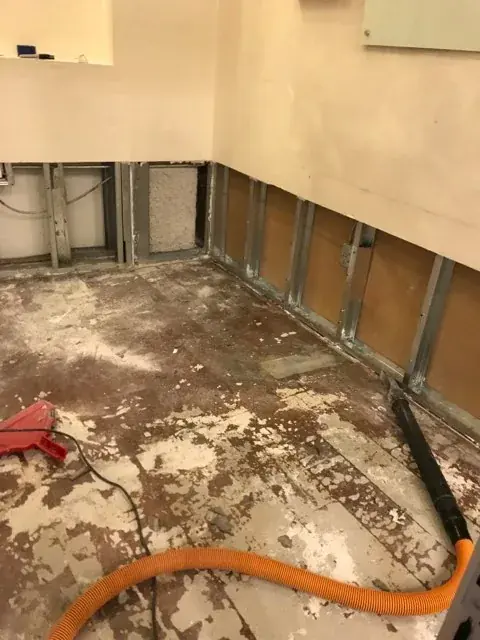
How the crew handles corroded in Pasadena
Call and dispatch
A real person answers 24/7 and the nearest Pasadena crew rolls with pumps, air movers, and moisture meters.
On-site assessment
The crew traces the source and the full reach of the water, including what soaked into subfloor, plaster, and wall cavities.
Extract and dry
The extraction crew pulls the standing water, then runs air movers and dehumidifiers to the IICRC S500 standard, not just the surface.
Verify and document
The drying team logs moisture readings until the structure reads truly dry, then documents the loss for your insurance claim.
Not every pipe failure announces itself. In the early 1900s Craftsman bungalows and postwar homes of Pasadena, the original galvanized supply lines and cast iron drains corrode from the inside for decades, and a copper line thinned by hard water can weep through a pinhole for months, staining a ceiling and feeding mold long before anyone sees a drop. SOS Restoration finds the hidden leak, dries the wall from the inside, and stops the damage from spreading.
How to spot a slow, hidden leak
A chronic leak stays out of sight, so it usually shows up as a symptom rather than a puddle. Watch for these signs.
- A musty smell in one room, or a patch of wall or ceiling that stays cool and damp to the touch.
- A brown or yellow stain that slowly spreads on plaster or drywall, or paint that bubbles and lifts.
- Grout that stays dark, baseboards that swell, or a warped spot in a hardwood floor.
- A water bill creeping up with no change in use, or water moving when every fixture is off.
If any sound familiar, the leak has likely been active a while. Crews trace the true wet area with moisture meters and thermal imaging, then open only where needed. Pasadena Water and Power maps your meter and main shutoff on its water service pages.
Why old Pasadena plumbing corrodes from the inside
Pasadena is bungalow and mid-century country, and the plumbing inside those walls is often the original run. Age and hard water do the rest.
- Galvanized steel and cast iron. The galvanized supply lines and cast iron drains in Craftsman bungalows across Bungalow Heaven, Garfield Heights, and Washington Square rust from the inside, narrow with scale, and finally seep or split behind plaster and lath.
- Hard water and pinhole leaks. San Gabriel Valley water scales up copper and eats through it in pinholes, a slow drip that can run for months, and a corroded copper line in a mid-century slab becomes a slab leak of its own.
- Water heater corrosion. Hard water shortens a water heater's life, and a corroding tank often weeps from the base or fittings long before it fails outright, soaking a closet or garage floor.
How crews clean up a corroded pipe leak
A chronic leak means the water has had time to travel, so crews map its full reach with moisture meters and thermal imaging, then open only the smallest spots needed to reach it. The structural drying crew dries inside the wall rather than closing a damp cavity back up, and because months of damp so often means growth, the mold remediation crew removes and treats it in the same visit. A plumber replaces the failed line while crews hand you a full photo and moisture record.
Stain spreading or a musty smell you cannot place? Call and a crew will find the hidden leak across Pasadena day or night, dry it out, and stop the mold before it spreads.
☎ Call (626) 314-6471Gradual versus sudden, the harder insurance claim
Insurance treats a slow leak very differently from a burst. A pipe that ruptures is sudden and accidental and usually covered, but a line that corroded and dripped for months is often called gradual damage, and carriers regularly dispute or deny it.
That is where documentation matters most. Crews record the leak with dated photos, moisture readings, and a written scope, and note the mitigation done to slow the loss, which is what an adjuster looks for on a gradual claim. Because chronic damp so often means mold, the EPA guidance on mold and moisture is a useful reference, and Ready.gov keeps a plain water safety guide. If your failure was a sudden rupture, the burst pipe cleanup crew handles those.
A Craftsman bungalow hides its worst leaks
In a 1912 bungalow in Bungalow Heaven or Washington Square, the pipe that fails is usually the original galvanized or cast iron run, buried in a plaster and lath wall that gives no warning. It can weep for a whole season, wicking down the studs and feeding mold in the dark, while the only clue is a faint musty smell or a stain that keeps coming back. Any older Pasadena home on its first-generation plumbing deserves a moisture check behind the surface.
Why Pasadena homeowners call us
Rapid local response
The response team answers 24/7, and the nearest crew heads out the moment you call, across Pasadena and the San Gabriel Valley.
IICRC S500 drying standard
Crews take daily moisture readings and dry to the IICRC S500 standard before the equipment comes out, not just the surface.
Claim-ready documentation
The loss is documented with photos and daily moisture readings, the paperwork an adjuster needs to move a claim.
Local water damage experts
From galvanized pipes to slab foundations and foothill runoff, the local pros know how water moves in Pasadena and the San Gabriel Valley.
From Old Pasadena across the west San Gabriel Valley
Pasadena water damage pros respond city-wide and across the west San Gabriel Valley, day or night.
Local crews cover all of Pasadena and the west San Gabriel Valley, day or night. Whoever answers the Pasadena line asks for the cross street and which level of the home is wet.
Coverage runs across Pasadena, Altadena, South Pasadena, San Marino, Arcadia, Sierra Madre, La Canada Flintridge, Monrovia, San Gabriel, Temple City, and Alhambra.
See every neighborhood and ZIP covered ›Related restoration services
Common questions, answered
How do I know if I have a slow, hidden leak?
Look for a musty smell in one room, a stain that slowly spreads on a wall or ceiling, paint that bubbles, dark grout, swollen baseboards, or a water bill creeping up with no change in use. Any of these can mean a pipe has been leaking behind a wall for a while. Call (626) 314-6471 and a crew will find it.
Why do old Pasadena pipes corrode?
Most older homes here still run their original galvanized steel supply lines and cast iron drains, which rust from the inside over decades. The San Gabriel Valley hard water speeds it up, scaling and thinning copper and galvanized lines until they seep, drip, or split, almost always hidden inside a wall.
What is a pinhole leak?
A pinhole leak is a tiny hole that corrosion eats through a copper pipe, often driven by hard water. It can drip slowly for months inside a wall or under a cabinet, doing quiet damage and feeding mold long before anyone notices a stain.
Does insurance cover a slow leak?
It is harder than a burst. A sudden burst is usually covered, but a leak that dripped for months is often treated as gradual damage and disputed or denied. Thorough documentation helps, so crews record the leak and the mitigation with dated photos, moisture readings, and a written scope for your adjuster.
Can a corroded pipe cause mold?
Yes, and it often does. A slow leak keeps a wall cavity damp for weeks or months, which is exactly what mold needs. When crews find growth crews remove and treat it in the same visit while crews dry the structure.
Do you replace the corroded pipe?
A plumber replaces the failed line or handles a larger re-pipe. Crews handle the water damage side, finding the leak, drying the wall, and treating any mold, and crews coordinate the plumber so the cavity is dry before it is closed back up.
How do you find a leak inside a wall?
Crews use moisture meters and thermal imaging to map the true wet area behind walls, ceilings, and floors, then make the smallest openings needed to reach the source. That way crews dry the actual wet cavity instead of guessing or opening more wall than necessary.
Does hard water damage plumbing?
Over time, yes. San Gabriel Valley water is hard and leaves mineral scale inside pipes, water heaters, and fixtures, which accelerates corrosion and pinhole leaks in older copper and galvanized lines and shortens the life of a water heater.
Pasadena's water damage crew is standing by
Water sitting means damage growing. Call SOS Restoration and a Pasadena crew heads out across the San Gabriel Valley, day or night.
(626) 314-6471One call brings a Pasadena crew to your door, any hour