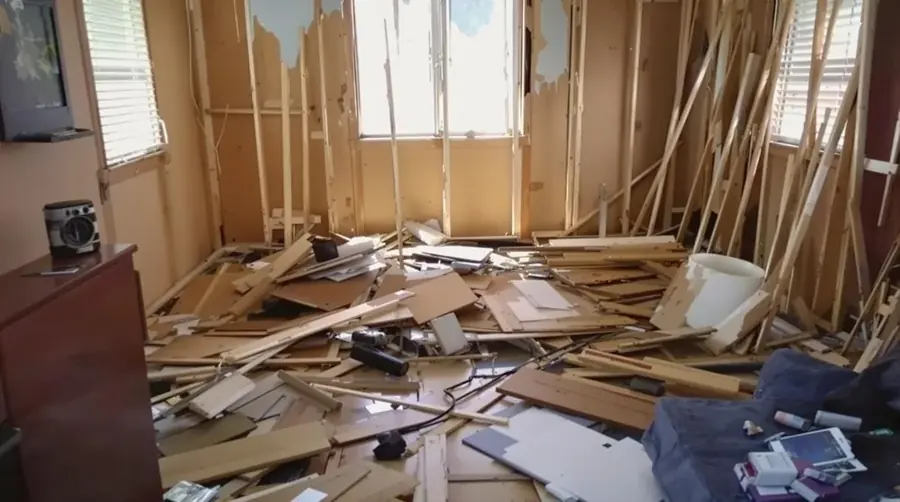
How the crew handles mudflow in Pasadena
Call and dispatch
A real person answers 24/7 and the nearest Pasadena crew rolls with pumps, air movers, and moisture meters.
On-site assessment
The crew traces the source and the full reach of the water, including what soaked into subfloor, plaster, and wall cavities.
Extract and dry
The extraction crew pulls the standing water, then runs air movers and dehumidifiers to the IICRC S500 standard, not just the surface.
Verify and document
The drying team logs moisture readings until the structure reads truly dry, then documents the loss for your insurance claim.
When rain hits a fresh burn scar above Altadena and Pasadena, the water runs off bare ground and carries mud, ash, rock, and debris downhill fast, and it sets hard once the water drains away. The crew reaches Altadena, West Altadena, La Canada Flintridge, Sierra Madre, and the north Pasadena foothills day or night, ready to muck out the debris and dry what is left. Call (626) 314-6471.
Why the foothills above Pasadena flow with mud
The January 2025 Eaton Fire burned the hills above Altadena and Pasadena, and the 2020 Bobcat Fire scorched the San Gabriel range above the valley. Rain on a fresh burn scar cannot soak into the bare, hardened ground, so it sheets off fast and picks up mud, ash, rock, and charred debris on the way down through the foothill streets.
A winter atmospheric river makes it worse, dropping weeks of rain in a day or two, and Los Angeles County Public Works operates the debris basins and foothill flood-control channels built to catch some of it. For several rainy seasons after a fire, the county issues debris-flow and evacuation warnings for these foothill neighborhoods.
Why a debris flow is not a clear-water flood
A debris flow does not leave clean water you can simply pump out. It leaves a heavy, gritty, often contaminated load that has to be shoveled and hauled before anything can dry, and a few inches of set mud weighs a surprising amount and hardens as it dries. That puts homes in West Altadena, Linda Vista, and the upper foothill streets first in line.
- Mud, ash, and rock fill garages, side yards, and ground-floor rooms
- The load sets hard, so muck-out comes before any drying
- Foothill and burn-scar debris often carries contaminants
- Porous materials the mud soaked usually cannot be saved
The sooner the muck-out starts, the less of that load dries into place, and the more of your flooring and lower walls crews can save. Waiting a day can turn a cleanable floor into a full tear-out.
The muck-out and dry-out
Crews shovel and haul the mud, ash, rock, and debris out of the affected rooms and garage, protect what contents can be saved, then the water extraction and removal gear pulls the water that carried it and the structural drying crew dries the structure to a verified standard. Because foothill debris is treated as a health hazard, crews clean and disinfect the surfaces and framing left behind, and where a backup or heavy soiling is involved the sewage and black water crew steps in with the right protection.
- Shovel and haul the mud, ash, and rock out of the affected areas
- Remove carpet, pad, and soaked drywall that cannot be salvaged
- Rinse and disinfect the hard surfaces and framing left behind
- Pull the standing water and dry the structure to a verified standard
Insurance and documenting a debris-flow loss
Mud and debris flow is often excluded from a standard homeowners policy under flood or earth-movement exclusions, and coverage may depend on a separate flood or difference-in-conditions policy. No payout is promised. What SOS Restoration does is document the loss thoroughly with dated photos, measurements, and a written scope, and after a declared disaster the crew points you to California Office of Emergency Services and county recovery resources so you know where to turn.
Mud and debris in your home after a storm? Call now and a foothill crew is on the way to Altadena, La Canada, and the north Pasadena foothills.
☎ Call (626) 314-6471Mud and rock, or clear storm water?
If the water that got into your home carried mud, ash, and rock off the foothills, this is the service you want, because that heavy contaminated load has to be shoveled out before any drying can start. If a storm instead drove clean-ish rain in through a wind-breached roof or a broken window, the storm damage restoration crew tarps, extracts, and dries that instead.
Why Pasadena homeowners call us
Rapid local response
The response team answers 24/7, and the nearest crew heads out the moment you call, across Pasadena and the San Gabriel Valley.
IICRC S500 drying standard
Crews take daily moisture readings and dry to the IICRC S500 standard before the equipment comes out, not just the surface.
Claim-ready documentation
The loss is documented with photos and daily moisture readings, the paperwork an adjuster needs to move a claim.
Local water damage experts
From galvanized pipes to slab foundations and foothill runoff, the local pros know how water moves in Pasadena and the San Gabriel Valley.
From Old Pasadena across the west San Gabriel Valley
Pasadena water damage pros respond city-wide and across the west San Gabriel Valley, day or night.
Local crews cover all of Pasadena and the west San Gabriel Valley, day or night. Whoever answers the Pasadena line asks for the cross street and which level of the home is wet.
Coverage runs across Pasadena, Altadena, South Pasadena, San Marino, Arcadia, Sierra Madre, La Canada Flintridge, Monrovia, San Gabriel, Temple City, and Alhambra.
See every neighborhood and ZIP covered ›Related restoration services
Common questions, answered
What is a debris flow and why are Altadena and Pasadena at risk?
A debris flow is a fast slurry of mud, ash, rock, and debris that runs off bare, steep ground during rain. After the 2025 Eaton and 2020 Bobcat fires left burn scars above the foothills, rain on that bare ground runs off hard, so Altadena, La Canada Flintridge, and the north Pasadena foothills stay at risk for several rainy seasons.
Do you remove mud, ash, and debris from inside the home?
Yes. Crews muck out and haul the mud, ash, rock, and debris from garages, side yards, and ground-floor rooms, then extract the water, sanitize the surfaces, and dry the structure. The debris has to come out before anything can dry properly.
Is debris-flow mud contaminated?
Often, yes. Foothill runoff and burn-scar mud can carry ash, soil bacteria, and whatever the water crossed on the way down, so crews treat it as a health hazard, clean and disinfect the surfaces it touched, and remove porous materials that cannot be cleaned.
Will insurance cover mudflow or debris-flow damage?
Often it is excluded from a standard homeowners policy under flood or earth-movement exclusions, and coverage may depend on a separate flood or difference-in-conditions policy. No payout is promised. Crews document the loss in full and, after a declared disaster, point you to Cal OES and county resources.
How fast can you respond during a big storm?
Crews reach the foothill areas day or night in normal conditions. During a major storm, road closures and active runoff can slow access, so crews move as soon as the way in is safe and stage crews close to the hardest-hit areas.
Foothill runoff pushed mud into my garage, can you help?
Yes. Muddy runoff filling garages, side yards, and ground floors is one of the most common calls crews get from the foothills. Crews shovel out the mud and debris it carried, extract the water, and dry the space to prevent mold.
Which foothill areas do you serve?
Crews serve Altadena and West Altadena, La Canada Flintridge, Sierra Madre, Linda Vista, and the upper and north Pasadena foothills, along with the rest of Pasadena and the west San Gabriel Valley.
Pasadena's water damage crew is standing by
Water sitting means damage growing. Call SOS Restoration and a Pasadena crew heads out across the San Gabriel Valley, day or night.
(626) 314-6471One call brings a Pasadena crew to your door, any hour