How the crew handles structural drying in Pasadena
Call and dispatch
A real person answers 24/7 and the nearest Pasadena crew rolls with pumps, air movers, and moisture meters.
On-site assessment
The crew traces the source and the full reach of the water, including what soaked into subfloor, plaster, and wall cavities.
Extract and dry
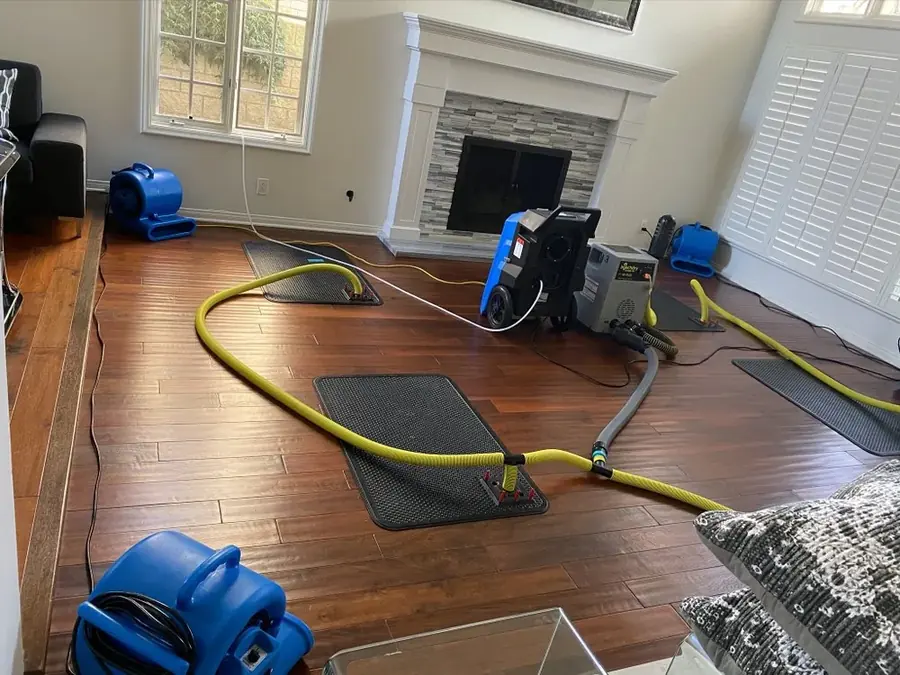
The extraction crew pulls the standing water, then runs air movers and dehumidifiers to the IICRC S500 standard, not just the surface.
Verify and document
The drying team logs moisture readings until the structure reads truly dry, then documents the loss for your insurance claim.
Pulling the standing water out is only half the job. The water you cannot see, soaked into plaster, framing, subfloor, and a concrete slab, is what grows mold and cups a hardwood floor weeks later. Structural drying is the science of getting all of it out and proving it is gone. SOS Restoration dries Pasadena and San Gabriel Valley homes to a verified standard with commercial equipment and daily monitoring, not just dry to the touch.
How professional drying works
Real drying balances three things at once, and missing any one of them just moves the water around the room instead of removing it.
- Airflow. High-velocity air movers sweep the wet surfaces so trapped moisture evaporates into the air where it can be captured.
- Dehumidification. LGR and desiccant dehumidifiers pull that moisture back out of the air before it soaks into dry material elsewhere in the home.
- Monitoring. Crews meter every wet material daily against a dry standard taken from an unaffected part of the same house, and only when the two match is the job done.
That daily reading, not a guess, is what separates drying a house from simply airing it out. Crews follow the IICRC S500 standard for applied structural drying, so the meter sets the schedule and you get a documented result.
What crews dry in Pasadena homes
Pasadena housing stock dries differently than new construction, so crews moisture-map every material first, then match the equipment to what got wet.
- Craftsman plaster and lath holds water longer than modern drywall and cracks if it is pushed too hard, so crews dry it gently in the bungalows of Bungalow Heaven and Chapman Woods.
- Hardwood floors can often be saved with specialty drying mats and floor systems if crews reach them fast, instead of being torn out and replaced.
- Tile over a concrete slab holds enormous amounts of water and is the slowest part of a mid-century job, so a wet slab in Washington Square or San Marino needs commercial dehumidification, not a rented unit.
Why DIY fans are not enough
A box fan and a store-bought dehumidifier move a little air and pull a little water, but they cannot reach the moisture inside a wall cavity or deep in a slab, and they cannot tell you when the structure is actually dry. The surface feels dry to the hand while the framing behind it stays wet for weeks.
That hidden moisture is where mold starts, and it can grow within 24 to 48 hours. The EPA is blunt: the key to mold control is moisture control. Read the plain-language EPA guidance on mold and moisture and the Ready.gov steps for drying out after water. When the drying is done right, the mold remediation crew never has to get involved.
The drying process, and how long it takes
Most Pasadena dry-outs run three to five days, but the real answer depends on how much water there was, what got wet, and how long it sat. A soaked slab takes longer than a single drywall wall, and the drying-time estimator gives a rough idea before a crew confirms it on-site. Whether the water came from the extraction crew or a job that started elsewhere, crews dry it to the same verified finish, logging moisture and humidity daily and pulling the gear only when the readings hit the dry standard.
Water damage in Pasadena does not wait. Call now and a crew is on the way to dry it right the first time.
☎ Call (626) 314-6471Why older Pasadena homes dry slowly
A Craftsman bungalow is plaster on wood lath, and many mid-century homes sit on a concrete slab, and both hold water far longer than the drywall and framing of a new build. Dry old plaster too aggressively and it cracks, leave a slab damp and mold takes hold under the floor. Getting a Bungalow Heaven or Chapman Woods home truly dry takes the right equipment and daily readings, not just time and a couple of fans.
Why Pasadena homeowners call us
Rapid local response
The response team answers 24/7, and the nearest crew heads out the moment you call, across Pasadena and the San Gabriel Valley.
IICRC S500 drying standard
Crews take daily moisture readings and dry to the IICRC S500 standard before the equipment comes out, not just the surface.
Claim-ready documentation
The loss is documented with photos and daily moisture readings, the paperwork an adjuster needs to move a claim.
Local water damage experts
From galvanized pipes to slab foundations and foothill runoff, the local pros know how water moves in Pasadena and the San Gabriel Valley.
From Old Pasadena across the west San Gabriel Valley
Pasadena water damage pros respond city-wide and across the west San Gabriel Valley, day or night.
Local crews cover all of Pasadena and the west San Gabriel Valley, day or night. Whoever answers the Pasadena line asks for the cross street and which level of the home is wet.
Coverage runs across Pasadena, Altadena, South Pasadena, San Marino, Arcadia, Sierra Madre, La Canada Flintridge, Monrovia, San Gabriel, Temple City, and Alhambra.
See every neighborhood and ZIP covered ›Related restoration services
Common questions, answered
How long does structural drying take?
Most Pasadena dry-outs run three to five days. The real time depends on how much water there was, what got wet, and how long it sat. A soaked slab or old plaster dries slower than a single drywall wall.
Can I just run fans and a box dehumidifier?
For a small, fresh spill, maybe. For anything larger, no. Consumer gear cannot reach moisture inside walls or a slab and cannot confirm the structure is dry, so the surface feels dry while the framing behind it stays wet and grows mold.
How do you know when it is really dry?
Crews set a dry standard from unaffected materials in your home, then meter the wet areas every day until they match it. Crews pull the equipment only when the readings confirm it, and crews document that standard for your file.
Do you dry inside walls without tearing them out?
Often, yes. With early access crews can dry a wall cavity in place using specialty equipment and controlled airflow, which saves the plaster or drywall. If material is contaminated or too far gone, removing it is faster and safer.
Do you dry old plaster and hardwood without ruining them?
Yes, that is a big part of the work in Pasadena's older homes. Crews dry Craftsman lath and plaster gently so it does not crack, and crews use floor drying systems to save hardwood that would otherwise be pulled up and replaced.
Does drying prevent mold?
It is the single most important step. Mold needs moisture, and it can start within 24 to 48 hours. Drying the structure quickly and completely to a verified standard is what stops mold before it begins.
Will insurance pay for drying equipment?
Yes. Professional drying and monitoring are a standard, expected line item on a water damage claim. Crews document the daily readings and the final standard, and the loss is documented for your claim.
How much does the drying phase cost?
It depends on the number of air movers and dehumidifiers, the days of monitoring, and the size of the wet area. Crews give a clear scope before work starts. Call (626) 314-6471 and a crew will walk you through it.
Pasadena's water damage crew is standing by
Water sitting means damage growing. Call SOS Restoration and a Pasadena crew heads out across the San Gabriel Valley, day or night.
(626) 314-6471One call brings a Pasadena crew to your door, any hour