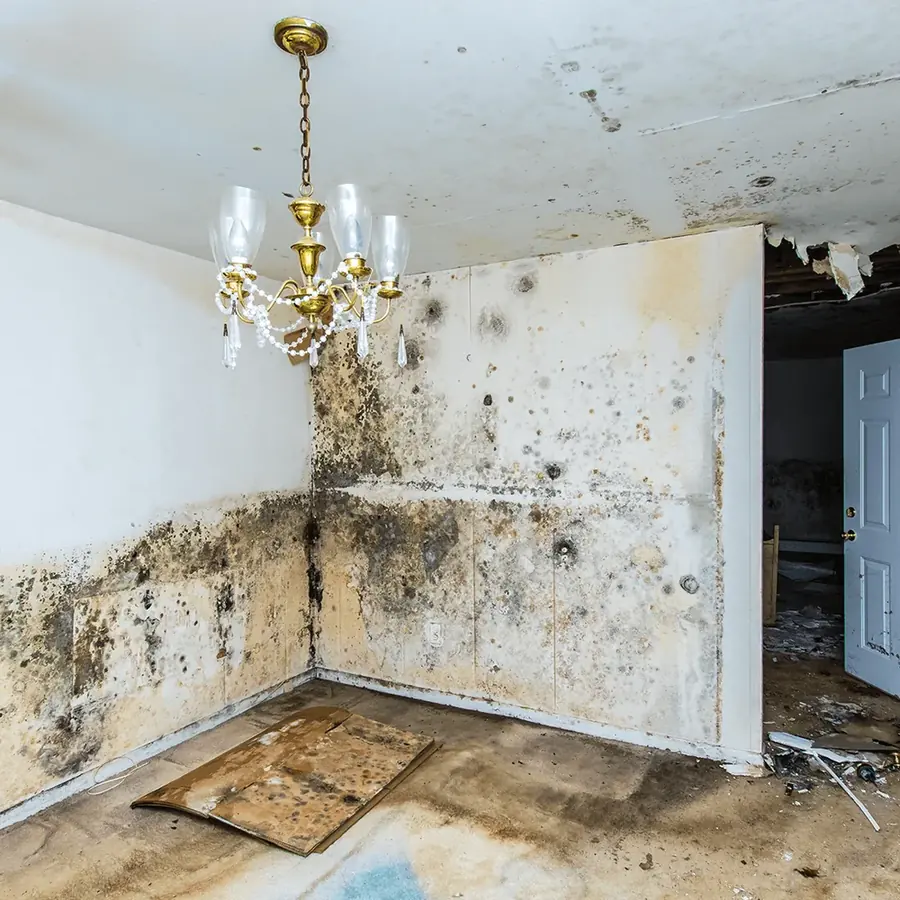
How the crew handles mold remediation in Pasadena
Call and dispatch
A real person answers 24/7 and the nearest Pasadena crew rolls with pumps, air movers, and moisture meters.
On-site assessment
The crew traces the source and the full reach of the water, including what soaked into subfloor, plaster, and wall cavities.
Extract and dry
The extraction crew pulls the standing water, then runs air movers and dehumidifiers to the IICRC S500 standard, not just the surface.
Verify and document
The drying team logs moisture readings until the structure reads truly dry, then documents the loss for your insurance claim.
Mold is a moisture problem in disguise: a musty smell, a dark patch in a closet, or a stain spreading on old plaster, but the real cause is always water that stayed too long. SOS Restoration remediates mold across Pasadena and the San Gabriel Valley, from a small bathroom patch to a whole home after a hidden leak, using IICRC S500 methods and honest containment.
How crews remove mold in Pasadena
Mold remediation follows a set sequence, and skipping a step is how it returns a month later. Crews inspect and map the moisture, then fix the source first, whether a corroded pipe, a slow slab leak, or a roof leak. Crews seal the work zone with poly sheeting and HEPA-filtered negative air, remove the contaminated porous material, HEPA vacuum, treat surfaces with an EPA registered antimicrobial, and dry the structure with structural drying. On larger jobs crews bring in an independent assessor to sample the air, so you have proof the mold is gone.
Containment and negative air do the quiet heavy lifting, since disturbing mold without them seeds fresh growth in clean rooms. Read the plain-language EPA guidance on mold for how professional cleanup should work.
Why Pasadena homes grow mold fast
Pasadena hands mold everything it needs, and the area's older housing stock rarely lets moisture dry on its own.
- Hidden slab and pipe leaks in older Craftsman and mid-century homes weep for months inside a wall or under a floor, hitting Temple City, South Pasadena, and Bungalow Heaven hardest.
- Humidity after a winter atmospheric-river storm pushes indoor moisture past the roughly 60 percent line where mold thrives. Ready.gov covers the mold risk after water and flooding.
- Hard water keeps fixtures and cabinets in a chronic damp state, and a slow drip under a Monrovia sink can grow a colony out of sight.
The signs, and the leak you cannot see
Suspect mold when you get a persistent musty smell, black, green, or white fuzzy patches, bubbling paint or warped trim near an old leak, or allergy and asthma symptoms that ease when you leave home. The worst Pasadena jobs start with a slow slab or pipe leak that weeps for months inside a wall; the surface looks fine until the smell arrives and the colony is already living in the cavity.
Smell mold or see a spreading stain? Call now. A crew is on-site across Pasadena day or night to find the source and contain it.
☎ Call (626) 314-6471Black mold and your health
Breathing spores can trigger allergic reactions, asthma attacks, and irritation of the eyes, skin, throat, and lungs, hardest on infants, older adults, and anyone with asthma or a weakened immune system. Black mold usually means Stachybotrys, which grows on constantly wet, paper-rich material like drywall and plaster. It deserves careful removal, but the color matters less than the water behind it: all indoor mold should be removed whatever its shade, and the permanent fix is always removing the moisture source and drying the structure first.
Mold, California rules, and who is responsible
No state mold license. California does not license mold assessors or remediation contractors the way some states do, so there is no state mold license to hold or require. The credential that matters is industry method, and crews follow the IICRC S500 standard for water and mold work. Be cautious of any company that implies a state mold license exists.
Landlords and tenants. California law requires rental housing to be kept habitable, and visible mold from a leak or damp can fall to the landlord to address. If you rent, report the moisture in writing and keep a record. In a condo or HOA, who pays usually follows the source of the water and the association documents.
Insurance usually turns on the cause: a sudden covered loss like a burst pipe cleaned up promptly is often covered, while a slow leak or long-term humidity is treated as maintenance and frequently denied, and many California policies cap mold coverage. If the mold grew from a leak crews can trace, the slab leak crew addresses the source at the same time. Call (626) 314-6471 for an honest assessment.
Why Pasadena homeowners call us
Rapid local response
The response team answers 24/7, and the nearest crew heads out the moment you call, across Pasadena and the San Gabriel Valley.
IICRC S500 drying standard
Crews take daily moisture readings and dry to the IICRC S500 standard before the equipment comes out, not just the surface.
Claim-ready documentation
The loss is documented with photos and daily moisture readings, the paperwork an adjuster needs to move a claim.
Local water damage experts
From galvanized pipes to slab foundations and foothill runoff, the local pros know how water moves in Pasadena and the San Gabriel Valley.
From Old Pasadena across the west San Gabriel Valley
Pasadena water damage pros respond city-wide and across the west San Gabriel Valley, day or night.
Local crews cover all of Pasadena and the west San Gabriel Valley, day or night. Whoever answers the Pasadena line asks for the cross street and which level of the home is wet.
Coverage runs across Pasadena, Altadena, South Pasadena, San Marino, Arcadia, Sierra Madre, La Canada Flintridge, Monrovia, San Gabriel, Temple City, and Alhambra.
See every neighborhood and ZIP covered ›Related restoration services
Common questions, answered
What is the difference between mold removal and remediation?
Removal is the everyday word, but no one can strip every spore from indoor air. Remediation is the full professional process that returns mold to a normal level: fix the moisture, contain the area, remove contaminated material, clean and treat, dry the structure, then verify.
Why do Pasadena homes grow mold?
Older Craftsman and mid-century homes hide slow slab and pipe leaks that weep for months, winter atmospheric-river storms push indoor humidity past the 60 percent line where mold thrives, and hard water keeps fixtures in a chronic damp state. Any of these can start a colony out of sight.
What is black mold and what are the exposure symptoms?
Black mold usually refers to Stachybotrys, which grows on constantly wet, paper-rich material. Exposure can cause allergic reactions, asthma flare-ups, and irritation of the eyes, skin, throat, and lungs, strongest in children, older adults, and anyone with asthma or a weakened immune system. All indoor mold should be removed whatever its color.
Is a special mold license required in California?
California does not license mold assessors or remediation contractors the way some states do, so there is no state mold license to require. Look instead for crews that follow the IICRC S500 standard and real containment. Be cautious of any company that implies a state mold license exists.
What permanently kills mold?
Nothing you spray keeps mold gone if the moisture stays. Mold returns wherever water returns, so the permanent fix is removing the water source and drying the structure completely, then cleaning and removing contaminated material. Bleaching a surface over a wet wall just hides the problem until it grows back.
Should I stay home during remediation?
For a small contained job, usually yes. For larger work, or if someone in the home has asthma or a weakened immune system, it can be better to stay clear of the work area. The containment and negative air keep spores out of the rest of the home either way.
Will insurance pay for mold removal?
It depends on the cause. Mold from a sudden covered loss, like a burst pipe cleaned up promptly, is often covered. Mold from a slow, long-ignored leak or chronic humidity is usually treated as maintenance and denied, and many California policies cap mold coverage. Crews document the cause to give your claim its best shot.
How much does mold removal cost in Pasadena?
It depends on the size of the area, where the mold is, and how much material must be removed. A small contained patch is modest; hidden growth behind walls or under a slab costs more. Crews give a clear scope up front. Call (626) 314-6471 for a straight answer.
How do I know if I have hidden mold?
The tells are a persistent musty smell, allergy symptoms that ease when you leave the house, staining or warping near a past leak, and any history of a slab leak, pipe failure, or damp after a storm. Crews confirm it with moisture meters, thermal imaging, and, where needed, air and surface sampling.
How long does remediation take and how do you verify it is gone?
Most residential jobs run a few days, longer with heavy demolition or a large area. Crews verify by drying the structure to a documented standard and, on larger jobs, having an independent assessor sample the air, so you have proof the mold is back to a normal level, not just a promise.
Pasadena's water damage crew is standing by
Water sitting means damage growing. Call SOS Restoration and a Pasadena crew heads out across the San Gabriel Valley, day or night.
(626) 314-6471One call brings a Pasadena crew to your door, any hour